

Why is Moray famous?
In 2023, Moray Speyside welcomed 877,000 visitors, a substantial increase from 707,000 in 2022. This quickly highlights the region’s growing pull, beckoning travellers from across the world to explore its many memorable locations. Moray’s fame and appeal lies in its rich appreciation of history, its breathtaking natural beauty and in its renowned whisky heritage.
But, that doesn’t quite encapsulate the depth of this remarkable place.
We wanted to take this opportunity to show off some of the incredible locations that surround our new home, reaching into a deep history that, quite literally, spans millenniums. From ancient Pictish monoliths to Moray’s golden sandy beaches (voted among the world’s most beautiful by National Geographic), Moray truly offers experiences for everyone willing to venture here.
Let’s see how Moray has preserved its historical significance while embracing contemporary appeal, creating a unique destination where past and present meet you with very warm and welcoming arms.
A Brief History Of The Picts
Who Are The Picts?

The Romans, already established as the world’s mightiest power at this point, called those who inhabited this area as ‘the last people on earth, the last of the free’.
The Picts were known for their fierce resistance against Roman expansion into northern Britain. Their first recorded encounter with Romans dates back to 297 AD, which marks the earliest known use of the term ‘Picti’ in Roman writings.
The name ‘Pict’ comes from the Latin word ‘Picti,’ basically meaning ‘painted people.’ This term was likely used by the Romans to describe the Picts’ practice of tattooing or painting their bodies. The Romans described the Picts as fearsome warriors – but ‘troublesome’ and hard to control. Unlike the Celtic people south of modern-day Scotland who became more Romanised, the Picts remained on the periphery of Roman influence and frequently clashed violently with Roman legions.
They never fully succumbed to Roman rule either, as evidenced by the construction of Hadrian’s Wall and the Antonine Wall, built partly to keep the Picts out of Roman-controlled territories. The Picts’ successful resistance against Roman expansion contributed to their legendary status and the enduring image of them as painted warriors who fiercely defended their lands against the Roman Empire.
What is The Largest Pictish Fort in Scotland?
The Pictish Fort (located on the north Moray coast) was Northern Britain’s largest known early medieval fort. It featured impressive defences, including eight-meter-thick and six-meter-high rampart walls, enclosing an area that housed an early Christian chapel and a complex well.
The University of Aberdeen’s Northern Picts project have uncovered exciting discoveries here, including decorated bone pins, combs and strong evidence of metalworking. These findings, along with the discovery of a rare Pictish ring in 2023, continue to reveal the fort’s importance and the high-status activities that took place there.
Whispers of Witches, Warriors and Kings
An Unsolved Puzzle

The Pics also left around 200 mysterious symbol stones that cover Scotland from the Firth of Forth to the Northern and Western Isles. All we can say with confidence is that they are unique to the Picts, for no other European society has left such a gripping, thoroughly mysterious legacy.
Sueno’s Stone is therefore a must for those who appreciate lost myths and folklore. Towering at 6.5 meters, it is an imposing marvel of Pictish art; an ancient cross-slab that serves as a canvas for an unknown moment in history, of a legend that continues to clasp tightly to our imaginations. We can see that it depicts a large battle and a royal inauguration of some importance, but ironically the theories regarding their meaning aren’t set in stone.
One of the most intriguing stories associated with the stone links it to Shakespearean lore. Local tradition suggests that this very spot marked the fateful encounter between Macbeth and the three witches. Folklore also suggests that the souls of the Weird Sisters (and many other witches to follow) remain trapped within the stone, imbuing it with an eerie, otherworldly presence. While this is certainly a great halloween tale, it undoubtedly hides a more complex story.
What is the significance of the Sueno's Stone?

The stone’s intricate battle scene carvings have fuelled various interpretations over the years. Some scholars associate it with Kenneth MacAlpin’s victory over the Picts – a pivotal moment that shaped Scottish history. Others propose a more localised significance, linking it to King Dubh’s triumph near Forres in 966 AD.
The very name ‘Sueno’ throws weight at theories about Viking invasions, suggesting the stone might depict a clash between Scots and Norse forces led by Sweyn Forkbeard. You may not recognise that name, but you’ve likely heard of King Cnut, his son.
Historical records hint at another mystery surrounding Sueno’s Stone – the case of the vanishing twin. Maps from the 16th to 18th centuries indicate the presence of a second, equally impressive stone nearby. This ‘twin pillar’ has since disappeared, leaving us to wonder about its fate and even its significance. Was it destroyed, repurposed, or perhaps buried somewhere, waiting to be rediscovered?
The Sueno’s Stone reminds us of history’s enduring power to inspire, perplex and teach – should we choose to listen. Its weathered surface continues to spark debate and fuel imagination, blending fact and folklore in a uniquely Scottish manner.
The Lantern of the North
Elgin Cathedral's 800-Year Legacy
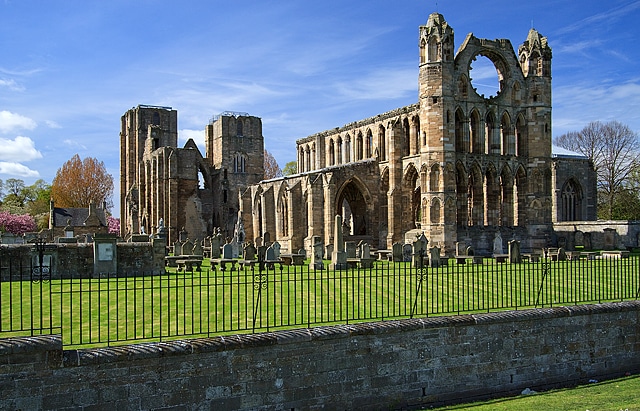
Established in 1224 on land granted by King Alexander II, Elgin Cathedral signals to the complex interplay of religious, political and economic forces in medieval Scotland. Known as the ‘Lantern of the North‘, this architectural marvel is marked by periods of construction, destruction, and then reconstruction.
Perhaps the most infamous event in the cathedral’s history occurred in 1390 when Alexander Stewart, Earl of Buchan – known as the ‘Wolf of Badenoch’ – orchestrated a devastating attack on the structure. This act of aggression, precipitated by Stewart’s excommunication by the Bishop of Moray, resulted in extensive fire damage. However, the cathedral’s subsequent reconstruction demonstrates the resilience of Elgin’s people and also the economic resources at their disposal.
The Reformation of 1560 marked another turning point in the cathedral’s fortunes. The shift in religious ideology (bought on by King Henry VIII) led to a gradual decline in the building’s maintenance and use. A pivotal moment in this decline came in 1567 when the Privy Council granted permission for the removal and sale of the cathedral’s lead roof.
This decision, apparently made to provide funds for military purposes, had catastrophic consequences for the building’s structural integrity. The lead was loaded onto a ship bound for the Netherlands, but in a twist of fate, the vessel sank off the coast of Aberdeen, taking with it the cathedral’s last hope of preservation.
Exposed to the elements, the cathedral’s deterioration accelerated. The collapse of the central tower in 1711 further compromised the structure. Despite these setbacks, significant portions of the cathedral remain, including the impressive west front, the choir and the unique octagonal chapter house – the latter being a rare example of its kind in Scotland.
Rather cruelly, it was the actions of these two men – the Wolf of Badenoch and Henry VIII – that contributed most significantly to the cathedral’s demise. And both men shared a nasty want for discarding their first wives. The Wolf of Badenoch’s marriage to Euphemia, Countess of Ross, ended in divorce because of his infidelity, while Henry VIII’s desire to annul his marriage to Catherine of Aragon set in motion the events leading to the English Reformation.
Today, preservation and ongoing archaeological study of the Cathedral continue to provide valuable insights into medieval construction techniques, drawing in visitors from across the globe. Its weathered stones serve as a tangible link to our past – inviting us to think on the lives and events that shaped this remarkable structure.
Moray's Gold
How many whisky distilleries are in Moray?
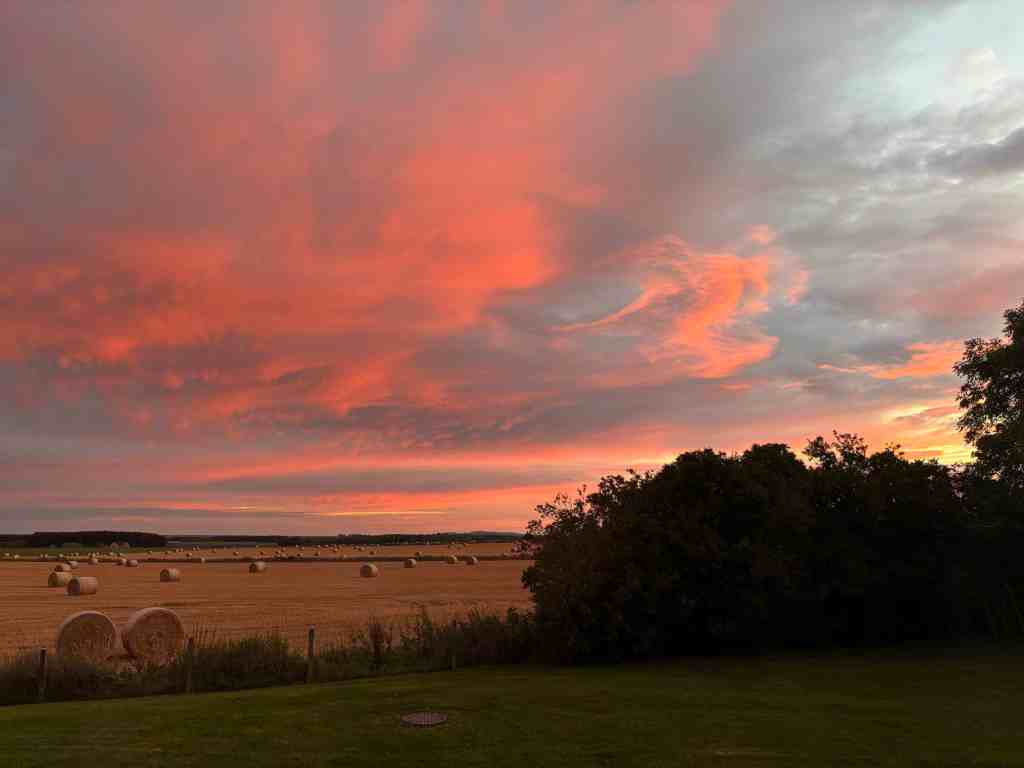
One of my favorite sayings here is ‘Today’s rain is tomorrow’s whisky’. And that happens to be absolutely right.
Moray boasts an astonishing concentration of malt whisky distilleries, with over 50 establishments. This remarkable density, which is unlike anywhere else in the world, transforms the region into a veritable whisky wonderland, where the air can often be sweetly perfumed with the angel’s share.
You’ll find legendary names like Glenfiddich, Glenlivet (a personal favourite), and Macallan nestled among Speyside’s rolling hills. These distilleries are still the trusted custodians of a centuries-old tradition that has shaped Moray’s identity. Their influence extends into food and drink manufacturing – although, primarily whisky production – accounting for around 36% of Moray’s economy.
The Malt Whisky Trail offers a taste of this long-lasting legacy, something you’d struggle to find anywhere else. As you start the trail, you’ll learn how Moray’s unique geography contributes to its world-renowned spirits. The region’s geology acts as a natural filter, infusing the water with minerals that are essential for the whisky’s character. Speyside’s sheltered valleys and temperate climate also create ideal conditions for maturation, resulting in the smooth, complex flavours that define these highland malts. If you visit moray, we highly recommend this.
We can’t overstate the symbiosis between Moray’s landscape and its whisky. The pure waters of the River Spey, the locally grown barley (we work just next door to their fields), and even the sea air all play their part in crafting these exceptional spirits. It’s a testament to how deeply rooted whisky production is in Moray’s very soil.
As you sip a dram of Speyside single malt, you’re experiencing the essence of Moray itself, distilled into every glorious, golden drop.
Brodie Castle
A Legacy of Splendour and Struggle
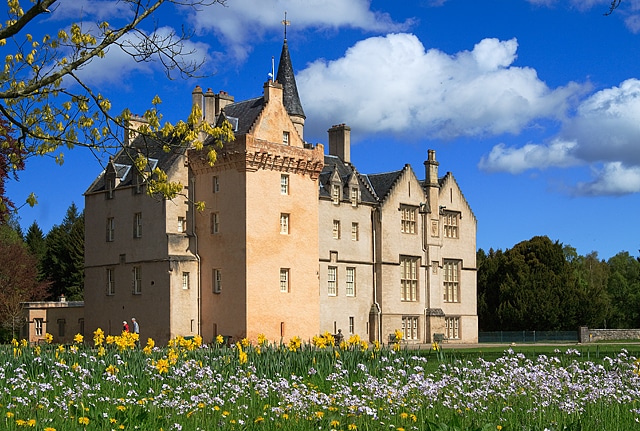
Brodie Castle, the ancestral home of Clan Brodie, is a welcome part of Scotland’s rich history but also tells a story of the financial challenges faced by noble families through the centuries. This rose-colored, turreted fortress has watched over the Moray countryside since 1567, its walls containing over 400 years of triumphs, secrets, loves, betrayals and tribulations.
As magnificent as this castle is, the privilege of owning such a grand estate often came at a steep price. Throughout the centuries, successive generations found themselves grappling with the enormous costs of maintaining (and restoring) their family legacy.
As with many noble families of the time, the Brodies often found themselves in the unenviable position of having to sell off family heirlooms to fund essential repairs and restorations; or sometimes even marry into the money. Lavish paintings, antique furniture, and precious artefacts that had been in the family for generations were reluctantly parted with to keep the castle from falling into disrepair.
This cycle of intense restoration and sale became a recurring theme in the castle’s history, reflecting the broader struggles of aristocratic families. But it also adds to the charm of Brodie Castle, where you can see the lavish extensions added throughout the years and then abruptly stopping, the mismatch of rooms and decor, all of which tell a story through time.
Despite these challenges, the Brodie family managed to preserve an impressive collection within the castle. Today, you can still marvel at the remaining antique furniture, Oriental artefacts, and Dutch Old Master paintings that hang defiantly on the walls. The library, housing over 6,000 volumes, is remarkable and shows the family’s commitment to maintaining their cultural heritage.
Who Owns Brodie Castle?
Today, Brodie Castle is under the care of the National Trust for Scotland, ensuring its preservation for future generations. This transition from private ownership to public trust is a common, albeit sad, fate for many such estates.
Tickets are £14 (£38 for a family ticket), or free if you are a member of Scotland National Trust. This is a fantastic day out with children too, offering a soft play section, a garden filled with activities and beauty, and two play parks.
As you explore the historic rooms and wander through its gardens, you’re seeing a snapshot of Scotland’s past, as well as the sacrifices made by the long family line to preserve their legacy; depicting the resilience and determination of those who fought to preserve it – often at great personal cost.
Moray's Other Delights
While Moray’s whisky heritage, castles, forts and ancient historical stories are undoubtedly intoxicating, the region’s allure extends further still. And we recommend them all! If you ever visit moray, here are the other places to visit:
Moray Coast Trail
For those seeking to immerse themselves in Moray’s natural beauty, the Moray Coast Trail beckons. This 44-mile scenic route isn’t just a walk; it’s a journey through diverse ecosystems and breathtaking vistas. As you traverse the trail, you’ll witness the dramatic interplay between land and sea that has shaped Moray’s coastline for millennia. From pristine sandy beaches to dense forrest, to rugged cliffs, each step reveals a new glimpse of the region’s beauty.
Bow Fiddle Rock
No discussion of Moray’s natural treasures would be complete without mentioning Bow Fiddle Rock. This striking natural sea arch near Portknockie serves as nature’s own sculpture gallery.
Carved by the relentless North Sea over countless ages, Bow Fiddle Rock reminds us of the raw power of the elements. Its distinctive shape, reminiscent of the tip of a fiddle bow, has made it an icon of the Moray coast and a favorite subject for photographers and artists alike.
Nelsons Tower
Nelson’s Tower, perched atop Cluny Hill in Forres, stands as a tribute to Admiral Lord Nelson’s victory at Trafalgar. Constructed between 1806 and 1812 through public subscription, it reflects the town’s deep admiration for the naval hero.
As you climb the 96 steps, you’ll encounter a silver cup from the Duke of Gordon and a sculpted bust of Nelson. However, the tower’s treasure lies in its panoramic views. From the top, you’re treated to a breathtaking image, stretching across the Moray Firth to Caithness and west towards Ullapool.
Open from April to September, Nelson’s Tower connects visitors to both local history and Britain’s naval heritage. Whether you visit for the views in the day, or the recently installed lights at night, the tower always delivers a memorable blend of history and natural beauty.
Stories That Matter
Our new home offers an incredible wealth of stories from the past. To the point where we’re still only scratching the surface. But our interest is ceaseless and we aim to bring you more stories from this incredible part of Scotland.
It’s our job to write stories at Cadmus Copy. Stories for businesses, for brands and for the people behind those brands; as stories allow us to reach out to like-minded people and make stronger, longer-lasting connections.
If you’d like us to write your content – to tell your story to the right audience – then please get in touch. We’re here to learn all about what you do, promising to tell it to others in the best possible way.
Thank you for reading this article. We wish you a very warm hello from the heart of Moray.