

Big budgets, massive content libraries and corporate resources no longer guarantee online visibility, which runs contrary to traditional plans. Small businesses with properly structured, expertise-focused websites are outranking national chains in AI-powered search results. It’s documented, measurable and the competitive advantage window remains open.
At Cadmus Copy, we’ve spent years working specifically with service-based businesses facing these exact challenges. We’ve watched AI emerge quicker than Athena springing fully-formed from Zeus’s head, and we’ve taken time to study the data that’s coming with it, in order to identify what will genuinely help you the most.
And what we’re seeing now differs from previous technology cycles. The businesses that understand semantic architecture, authority-building content strategy and AI-readiness are establishing positions that only improve over time.
In this article, we’ll cover the foundations that AI systems prioritise, the authority-building strategies that create lasting competitive advantage and the practical implementation path that doesn’t require technical expertise or massive budgets.
More importantly, we’ll address why timing matters and how small businesses currently hold structural advantages over larger competitors.
What Your Eyes Can't See But Search Engines Can't Ignore

There’s an invisible layer beneath every website, one that visitors rarely consider but AI systems rely on completely. When someone asks ChatGPT or Perplexity for a recommendation, it’s not evaluating typography or colour schemes. It’s parsing semantic data, structured markup and clear hierarchies.
Your beautiful homepage might look stunning to human visitors, but if the underlying structure is weak, you’re invisible to the systems that increasingly determine who gets found.
This is particularly important because discovery has changed. People still use Google, but they’re also asking Bing Copilot, Perplexity, ChatGPT and Google SGE for recommendations. And these AI systems don’t browse visually; they don’t judge on aesthetics and feeling, they interpret structured data. They’re looking for explicit signals about what you do, where you provide your services, who you serve and why you’re credible.
Without proper semantic architecture, you simply don’t exist in their consideration set.
Do I Need to Know Code to Implement Schema Markup?
No. Let’s be clear about this because it’s a common barrier that stops businesses from acting.
Modern CMS platforms (WordPress, Shopify, Squarespace) offer plugins and built-in tools for schema implementation. You’re not writing code; you’re filling out structured forms that generate the proper markup automatically. What schema actually does is provide explicit context about your business type, services, hours, location and pricing. It also gives similar details relating to your blog, which is important for modern SEO work.
It’s the difference between AI understanding you’re a ‘business website’ versus specifically recognising you’re a ‘Local Business, Plumber, Offers Emergency Services, Serving Moray.’ Schema markup can dramatically improve search rankings for small businesses precisely because it removes ambiguity. AI systems don’t have to guess what you do; you’re telling them explicitly.
The current standard is JSON-LD schema markup, which major search engines all support. Most businesses can implement basic LocalBusiness, Service and FAQ schema in an afternoon using freely available plugins. It’s not the technical complexity that holds businesses back; it’s simply not knowing it matters.
Here’s what’s remarkable about this aspect too: for 20 years, web design emphasised the visual layer because that’s what humans experience. Now we’re building for two audiences simultaneously. Humans who still need clarity, aesthetics and a memorable experience; and also AI systems that need structured data and semantic meaning.
The businesses that understand and cater for both will see a huge difference compared to those that don’t. Those optimising for only one will wonder why their beautiful website generates so little business, or why their well-structured site fails to convert visitors.
Schema markup handles the foundational structure. But, having said that, structure without substance is worthless.
Why Depth Beats Width Every Single Time

Businesses are generally told to ‘blog consistently’ and ‘create lots of content’. Volume mattered. Frequency mattered. However, the result was thousands of shallow, mediocre blog posts that generated minimal traffic and even less business. We’ve seen companies produce 200+ blog posts over two years that collectively drive maybe 50 visitors monthly. That’s not strategy; that’s expensive wheel-spinning.
There’s a better model, one that actually builds compounding value: the hub-and-spoke content strategy. It allows small businesses to compete without corporate budgets by demonstrating comprehensive expertise in a specific domain. This approach signals authority to both human readers and AI systems far more effectively than sporadic blogging or thin content spread across hundreds of pages.
What is a Content Hub and How Does it Help SEO?
A content hub is an interconnected system of related content pages structured around a central pillar. Think of it as building a comprehensive knowledge base for a specific topic you want to own.
Here’s the architecture: one comprehensive pillar page covering your core expertise broadly, then 10-15 cluster pages addressing specific subtopics in depth. Strategic internal linking between these pages creates a knowledge map that AI systems recognise as genuine expertise, not content marketing theatre.
Let’s make this concrete with a practical example for a plumbing business:
Pillar Page: ‘Complete Guide to Home Plumbing Systems’ (covers everything at a high level, links to all clusters).
Cluster Pages:
- Why Your Water Heater Makes Popping Sounds and What to Do About It
- Dealing with Shower Drain Backups: Causes and Solutions
- Garbage Disposal Humming But Not Spinning: Troubleshooting Guide
- Understanding Your Home’s Main Water Shut-Off Valve
- When Pipe Insulation Prevents Costly Winter Damage
Each cluster is specific, problem-focused and addresses real search intent. Someone searching ‘water heater popping sounds’ finds your detailed, helpful answer. They read it, trust your expertise, and when they need a plumber, you’re the obvious choice. Together, these pages demonstrate comprehensive knowledge across related topics.
Businesses building proper content hubs rank for 950+ keywords they never directly targeted. This isn’t hyperbole; it’s how topical authority works. When you thoroughly cover a domain, search engines recognise interconnected expertise and start ranking you for adjacent searches. You write about water heater sounds, but you end up ranking for water heater maintenance, water heater replacement timing, even water heater energy efficiency.
Most businesses approach content as marketing. They write to sell. Here’s the counterintuitive truth that we’ve observed repeatedly: content that genuinely helps without immediate selling actually converts better because it establishes trust and positions you as the obvious expert when someone’s ready to hire. The strategy works because it mirrors how humans actually assess expertise (through demonstrated depth of knowledge across related topics).
We’ve seen businesses abandon this after creating four or five cluster pages because they don’t see immediate results. We get it. You’re busy, content creation takes time and patience is expensive. But content hubs are compound interest for your online presence. The value accelerates over time as the interconnected structure strengthens. Six months in, you’re typically outranking competitors who’ve been at it for years. Twelve months in, you’re the authority in your market.
Structure and authority create visibility. But visibility without conversion is vanity. Your website must be purpose-built to turn visitors into clients.
The Simplicity of Websites

There’s an entire industry built around conversion ‘hacks’: countdown timers, false scarcity, manipulative pop-ups. Ignore it. Real conversion optimisation is about respect for your visitor’s time and intelligence. Make your website fast, clear and purpose-driven. Everything else is decoration.
We’ve watched businesses obsess over button colours whilst their site takes eight seconds to load. They worry about whether CTAs should say ‘Get Started’ or ‘Learn More’ whilst their mobile experience is broken. These details matter eventually, but they’re irrelevant if foundational elements are weak.
Properly optimised local websites can dramatically improve conversions, but the path there is systematic, not scattered. Small businesses can double conversion rates from 2-3% to 8-10% through methodical optimisation without increasing traffic. That means twice the business from the same visitor volume, purely through removing friction and providing clarity.
Start with speed. Every second of load time delay costs conversions. Under three seconds is the target. Beyond that, bounce rates climb, rankings suffer and frustrated visitors leave before ever seeing your carefully crafted message.
Mobile-first design is essential because 70%+ of small business traffic now comes from smartphones. Google actually prioritises mobile versions for indexing. If your website works brilliantly on desktop but poorly on mobile, Google just sees a poor website. More importantly, most of your potential customers only experience your mobile site. They’re browsing during lunch breaks, commuting, or standing in their flooded basement trying to find emergency help. Your mobile experience must work flawlessly.
What Should My Small Business Website Include for Better Conversions?
This question appears constantly in our conversations with business owners, and the answer deserves specificity:
Speed as foundation: Under three seconds load time. This single factor impacts bounce rate, search rankings and conversion rates simultaneously. It’s non-negotiable for competitive performance.
Clear CTAs on every page: ‘Get a Quote,’ ‘Book Consultation,’ ‘Call Now’ must be prominent, contrasting and surrounded by whitespace. Every page should guide visitors towards a specific action. Websites that clearly direct visitors towards next steps convert significantly better than those that make people hunt for contact information.
Local optimisation: City-specific landing pages with LocalBusiness schema, service areas explicitly defined, local testimonials prominently displayed. Local website optimisation creates measurable conversion improvements because it immediately signals relevance to visitors.
Trust signals throughout: Reviews, case studies, transparent pricing where appropriate, clear contact information, professional imagery. These elements compound credibility. Each one individually might seem small, but collectively they answer the subconscious questions every visitor asks: ‘Can I trust this business with my money?’
Mobile-first experience: Everything above must work brilliantly on smartphones first, desktop second. Test your site on your phone right now. Is the text readable without zooming? Do buttons work easily with thumbs? Can someone call you with one tap? If any answer is no, you’re losing business.
Ask yourself honestly: if you landed on your website as a stranger with a problem to solve, would the next step be immediately obvious? Would you trust this business with your money? If there’s hesitation, you’ve identified exactly what needs fixing.
Conversion architecture is about earned confidence. Each element (fast loading, clear navigation, prominent calls-to-action, genuine testimonials) compounds credibility. Remove one, and the entire structure weakens. This is why ‘quick fixes’ rarely work. You’re building systematic trust, and trust is holistic. Your visitor doesn’t consciously think ‘this site loads quickly, therefore I trust them,’ but a slow site triggers doubt. Navigation confusion creates friction. Missing trust signals raise questions.
Always Be Prepared

Most businesses build websites for their current needs. Six months later, they discover new tools they want to implement: AI chatbots, automated lead qualification, voice search optimisation. Then they learn their website isn’t structured to support any of it. Rebuilds are expensive. Smart businesses build with known future needs in mind.
AI integration isn’t speculative anymore. We’re watching it happen in real-time with clients and competitors alike. Chatbots handle customer service, voice search changes discovery patterns, personalised content delivery becomes standard expectation. The difference between websites that adapt quickly and those requiring complete rebuilds comes down to foundational decisions made today.
Should Small Businesses Use AI Chatbots on Their Websites?
Yes, if implemented properly. AI chatbots now handle 24/7 customer support without staff increases, lead qualification and intelligent routing, FAQ handling that reduces repetitive enquiries and appointment booking with CRM integration. Chatbots save businesses £8 billion annually through reduced customer service costs, and small businesses using them report hours saved weekly.
But (and this is important) poorly implemented chatbots frustrate customers. We’ve all experienced the maddening loop of trying to reach a human whilst a chatbot misunderstands our question repeatedly. The bot must actually help, not obstruct access to human support when needed. Good implementation means the chatbot handles simple, repetitive questions brilliantly and gracefully transfers to humans for complex issues.
And don’t forget timing! It might not be wise to have a large block of page space taken up by your chat bot, well before visitors have even had a chance to see what you do. Let them explore, let them see what you do clearly, then offer help.
Think of chatbots as your first-line support team, not your entire support strategy. Someone asking ‘What are your hours?’ or ‘Do you serve my postcode?’ gets instant answers. Someone with a complex, unusual problem gets connected to you. This division works because it gives simple questions immediate resolution whilst preserving your time for questions that actually require human judgment.
The AI-readiness framework consists of three layers, each building on the previous:
Structured Data Foundation: Comprehensive JSON-LD schema markup, clear business entity definitions, explicit service descriptions and FAQ markup for common questions. This builds on what we covered in the semantic structure section but extends to AI integration context. Your content should work equally well when read by humans on your website, parsed by AI systems answering voice queries, interpreted by chatbots helping customers or referenced by AI assistants making recommendations.
Conversational Architecture: Content that answers questions naturally, clear problem-solution pathways, definitions for core offerings and logical information relationships. Write like you’re explaining concepts to an intelligent friend, not an academic committee. AI systems trained on natural language perform better with conversational content than with corporate jargon.
Integration-Ready Infrastructure: API-first approach for future tools, modular design systems that accept new components, cloud hosting that scales automatically and separation of content from presentation layers. This matters because you want to add functionality without rebuilding foundations.
Building AI-ready websites represents a genuine competitive advantage for small businesses specifically because the infrastructure requirements fit in very well with general best practices: clean code, clear structure, fast performance, accessible content. You’re not building for AI separately; you’re building properly, which happens to work brilliantly for AI systems.
We’re watching real-time adaptation in digital business. Companies that adapt their infrastructure now will integrate AI tools in days. Those that don’t will watch competitors deploy chatbots, voice search optimisation and personalised experiences whilst they’re stuck in six-month rebuild cycles. The adaptation advantage compounds exponentially. First businesses with AI chatbots get efficiency gains. Second-wave businesses just achieve parity.
AI-readiness matters. But it’s worthless if your website can’t scale with business growth. Let’s address the infrastructure decisions that determine long-term viability.
Small Business Websites Need Tomorrow's Planning
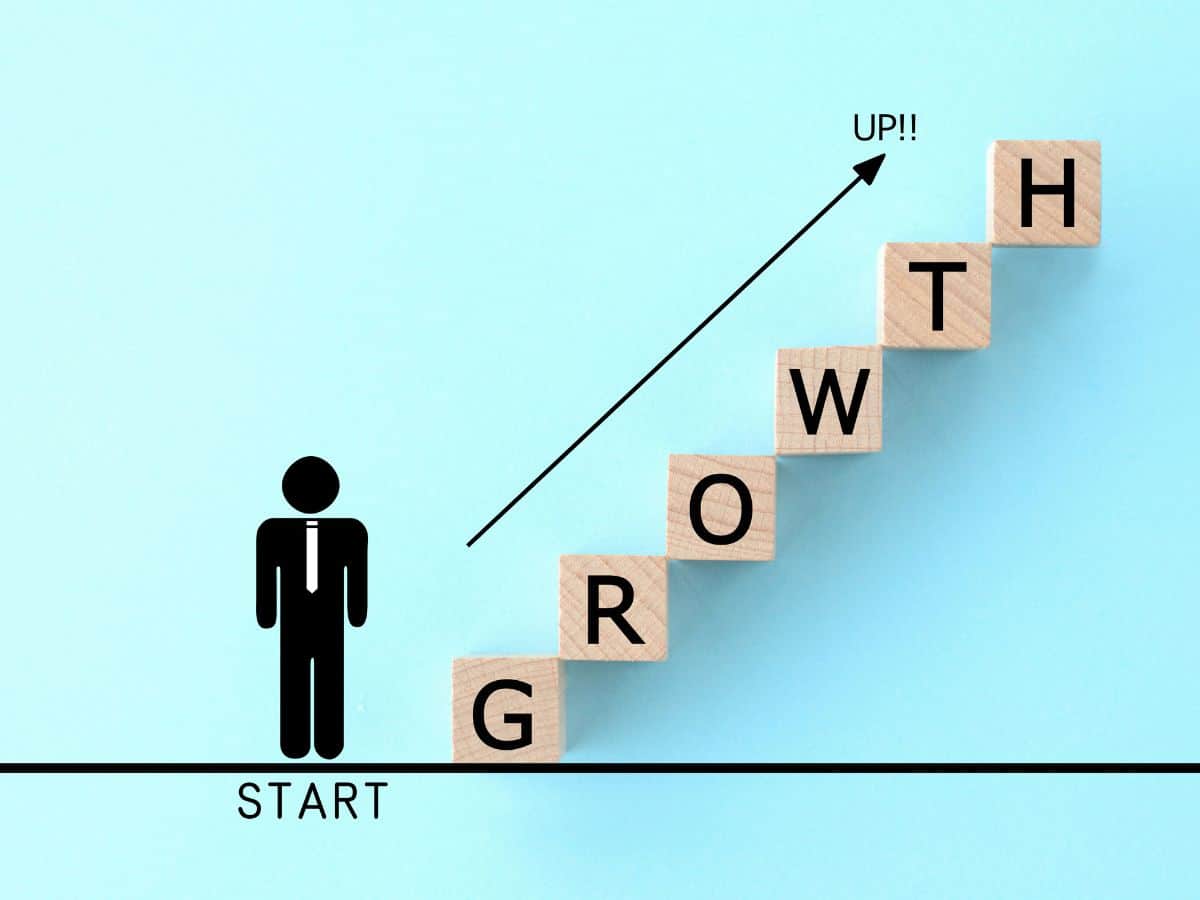
There’s a peculiar phenomenon in small business websites. Companies plan their physical spaces for growth; they lease slightly larger offices, buy equipment that handles increased capacity. But their websites get built for exactly today’s needs. Then growth becomes an expensive, and ongoing, technical problem.
The tool that should allow for fluid growth and stability becomes a constraint rather than an asset. Every change requires expensive developer time because the foundations weren’t built to accommodate expansion.
How Much Should a Small Business Website Cost?
This question crops up often because cost varies wildly (£500 to £50,000+) depending on approach, and businesses understandably want to know what’s reasonable. Here’s the honest answer: it depends entirely on what you need it to do in three years, not what you need today.
Budget tier reality looks like this:
£500 to £3,000: Template-based, limited customisation, works for very simple needs. You’re essentially renting a design and adding your content. Fine for a side project or testing a business concept. Insufficient for businesses planning serious growth.
£3,000 to £8,000: Custom design, proper semantic structure, room for growth. This is where most small businesses should invest. You get professional design that reflects your brand, proper technical foundations and architecture that accommodates expansion. Future-proof website architecture prevents costly rebuilds.
£8,000 to £20,000+: Complex functionality, e-commerce, extensive integrations. Necessary for businesses with sophisticated needs or those in competitive markets requiring custom tools.
The question isn’t ‘what should it cost?’ but ‘what does it need to do in three years?’ Build for that reality, and initial investment becomes cheaper than incremental rebuilds.
We’ve seen businesses spend £3,000 on a proper foundation once, then add features for £500 to £1,500 each as needed. Compare that to businesses that spent £1,500 on a cheap site, then £4,000 to rebuild it 18 months later, then another £6,000 two years after that. They spent £11,500+ versus the £6,000 total the first business invested, and they’ve dealt with multiple disruptions and down time.
Scalability is a practical business infrastructure consisting of three main elements:
Architecture That Accommodates Growth: Modular design systems, content management that allows expansion without restructuring, navigation that scales from 5 pages to 50 without breaking and performance optimisation that handles traffic increases. This means someone can add new service pages, location pages, team members or blog content without needing developer intervention for basic additions.
Performance Under Load: Cloud hosting that automatically scales, CDN (Content Delivery Network) for geographic distribution, database optimisation for growing content libraries and Core Web Vitals maintained regardless of traffic. You don’t want your site crashing or slowing when you’re featured in local press and get a traffic spike.
Integration Flexibility: CRM connectivity for growing customer databases, e-commerce capability even if not needed immediately, marketing automation integration and third-party tool compatibility. Scalable web development considers future integration needs from the beginning.
Most businesses view website development as a project, something with a start and end date. It’s actually infrastructure, closer to your phone system or your lease. You build it properly once, then expand and maintain systematically. The businesses that understand this spend less over five years than those doing complete rebuilds every 18 months. More importantly, they avoid the disruption, the lost time training staff on new systems and the inevitable bugs that come with major overhauls.
Ask yourself: if your business doubled tomorrow, would your website support that growth or constrain it? If the answer isn’t immediately ‘support it,’ you’ve identified a strategic vulnerability that deserves attention before it becomes urgent.
Why Small Is Stronger Than Big (For Now)

Every few years, technology creates temporary inversion moments where small and nimble beats large and established. Mobile-first design did this around 2013 to 2015. Social media did it in 2008 to 2011. We’re in another right now with AI-readable architecture and semantic structure. The window stays open roughly 18 to 36 months before corporate competitors adapt at scale.
This matters because opportunity windows close. The businesses moving now (implementing semantic structure, building content hubs, optimising for AI systems) are establishing positions that become progressively harder to displace. First-mover advantage in AI visibility compounds because the authority you build today influences rankings tomorrow.
Can a Small Business Website Compete with Large Company Websites?
Absolutely, and currently with specific advantages that we’re documenting across client work and market observation:
Implementation speed: You can make decisions and deploy changes in days, not quarters. No approval hierarchies, no committee reviews, no corporate communication protocols. Small businesses can act whilst larger competitors are still scheduling meetings.
Surgical focus: You demonstrate deep expertise in specific domains rather than trying to be everything. Building topical authority allows competitive ranking against much larger sites because you’re clearly the expert in your niche, whilst they’re generalists with surface-level coverage.
Clean slate opportunity: You build with modern standards without legacy system constraints. Large companies are managing websites built in 2015, running on outdated CMSs, integrated with legacy systems. You’re starting fresh with current best practices.
Authentic voice: You speak directly as business owners rather than through corporate communication layers. This matters more than most businesses realise. People connect with authentic expertise, not corporate polish.
Small businesses with proper structure are outranking national chains in AI-powered search results right now. This isn’t occasional; it’s systematic. When AI systems look for genuine expertise, clear structure and helpful content, they often find small businesses first because those businesses weren’t hamstrung by corporate constraints.
Large companies struggle with corporate limitations: approval hierarchies slow decision-making, legacy systems require expensive integration work, distributed teams lack coordinated implementation, risk-averse cultures resist rapid change and massive content libraries need systematic restructuring. These aren’t insurmountable problems. They’re just slow to solve. That slowness is your competitive advantage.
And please don’t think we’re forcing you into fear-based decision making. It’s just pragmatic timeline recognition. The advantage window exists now. Current 2026 web design trends favour small businesses that can implement quickly. It will close as larger competitors complete their transformations, probably over the next 18 to 24 months.
We’ve observed this pattern repeatedly across technology changes: new approach emerges, small businesses adapt faster, competitive advantages appear, then large companies catch up and the advantage normalises. Digital marketing in a nutshell.
You have to recognise which technology shifts create lasting value (versus temporary hype) and move decisively in that direction. AI-readable architecture is becoming foundational. It’s basic infrastructure that will matter for years to come.
Website development is strategic infrastructure deserving serious investment and thoughtful planning. You now know what proper infrastructure looks like. The remaining question is timing.
Build Once and Build Properly

Most businesses ask: ‘What’s the cheapest website that looks professional?’ The better question would be: ‘What investment now prevents expensive problems later?’
This separates businesses that extract ongoing value from their websites from those that see them as recurring expenses. We’ve worked with both types. The first group invests thoughtfully once, then adds capabilities incrementally as needs arise (which is the whole point behind scalable digital marketing). The second group perpetually feels behind, always planning the next rebuild, never quite satisfied with what they have.
Consider where this technology trajectory leads. AI systems will become more sophisticated at understanding expertise, evaluating credibility and making recommendations. Voice search will continue growing. Automation will handle more customer service interactions. Personalisation will become standard expectation, not premium features.
The websites built with proper foundations (semantic structure, clear architecture, integration flexibility) will adapt to these changes incrementally. You’ll add an AI chatbot in an afternoon. You’ll optimise for voice search with some content updates. You’ll implement personalisation through plugin installation. Those built cheaply or without strategic planning will require complete overhauls. They’ll watch competitors deploy new capabilities whilst trapped in rebuild cycles.
Return on investment is time saved through automated customer service, leads qualified before they reach you, authority that closes sales before sales conversations begin, scalability that supports growth without technical constraints and competitive positioning that compounds over months and years.
Your website can be either a solved problem or a recurring expense.
The difference comes down to building properly the first time, with semantic structure AI systems understand, content that demonstrates genuine expertise, conversion architecture that respects visitor intelligence and technical foundations that accommodate inevitable change. We’ve seen both approaches. The businesses that invest in proper infrastructure spend less, stress less and grow faster than those constantly patching and supporting inadequate foundations.
The businesses we admire aren’t those with the flashiest designs (and that’s not belittling the importance of this). They’re usually the ones who understood that website development is solid infrastructure deserving serious investment and thoughtful planning. They built once, properly, then focused their energy on actually running their businesses rather than perpetually fixing their digital presence.
You now know what proper infrastructure looks like: the semantic foundations AI systems require, the content strategy that builds authority, the conversion principles that turn visitors into clients, the technical decisions that enable future capabilities and the competitive timing that makes action now more valuable than action later.