

At a time where digital transformation is reshaping industries and human interaction, one might wonder what relevance ancient Greek myths could possibly hold. A recent social media trend asking, ‘How often do you think about the Roman Empire?’ has ignited conversations, revealing that these ancient narratives and histories still captivate our modern imagination.
As we quickly strive towards the new challenges of the digital age – from the ethical dilemmas of data privacy to keeping up with the latest and greatest tech – it becomes increasingly clear that these age-old tales are far from obsolete. In fact, they serve as a golden thread guiding us through a complex, digital maze.
This article aims to highlight the lingering relevance of Greek Mythology, exploring its influence in our language, thoughts, emotions and even within our digital world that seems so far removed from the mythical. Revisiting these timeless tales offers us a unique perspective – a perspective that not only enriches our worldview but also provides actionable insights for your digital marketing quests.
Mythology & Modern Lingo
Our language remains deeply intertwined with mythology, serving as a powerful tool that not only shapes our thoughts but also guides our actions. The origins of many words in our modern lexicon offer more than just historical context: they have helped articulate the inexplicable phenomena of the world and have allowed us to communicate on a much deeper level. Today, these words continue to offer us a way of understanding complex emotions, ethical dilemmas and even technological advancements. In this sense, the words we use in our marketing can have an incredible effect.
By understanding the etymology of these words, we not only enrich our vocabulary and reach, we also gain insights into the values, warnings and wisdom embedded in the stories associated with them.
Whether we hear a distant ‘echo’, solve a puzzle using a ‘clue’, or describe a task as ‘Herculean’, we are invoking the very essence of ancient myths, often without realising it:
‘Narcissism’
Derived from the myth of Narcissus, a youth so entranced by his own reflection that he ultimately died staring at it, the term ‘narcissism’ has evolved to describe a condition characterised by self-preoccupation and a lack of empathy.
Considering that success on social media is heavily weighted towards self-promotion, where the quest for likes and followers can become all-consuming, the tale of Narcissus serves as a cautionary reminder. It warns us of the perils of excessive self-focus and the importance of genuine human connection.
‘Tantalise’
The word ‘tantalise’ is derived from the myth of Tantalus, who was punished by being placed in a pool of water under a fruit tree. Whenever he reached for food or drink, they would move further from his reach. This term has come to describe the act of teasing someone with the promise of something that is actually unobtainable.
From a modern business perspective, the concept of ‘tantalising’ could easily link to customer expectations. For instance, companies often make grand promises through advertising campaigns, raising consumer expectations to unrealistic heights. However, when these promises are not met, the result is customer dissatisfaction and shattered trust, much like the eternal frustration experienced by Tantalus.
By understanding the moral behind Tantalus’s story, businesses can be reminded of the importance of setting realistic expectations and delivering on promises, thereby fostering trust and long-term relationships with their customers.
‘Titanic’
The word ‘titanic’ comes from the Titans, a primordial race of powerful gods that were overthrown by the Olympian gods.
In the context of today’s corporate world, the term ‘titanic’ often describes companies or projects of enormous scale and influence. Take, for example, the rise and fall of corporate giants in the tech industry – such as BlackBerry or Nokia. Their resilience against adapting to touch-screens lead to their inevitable downfall.
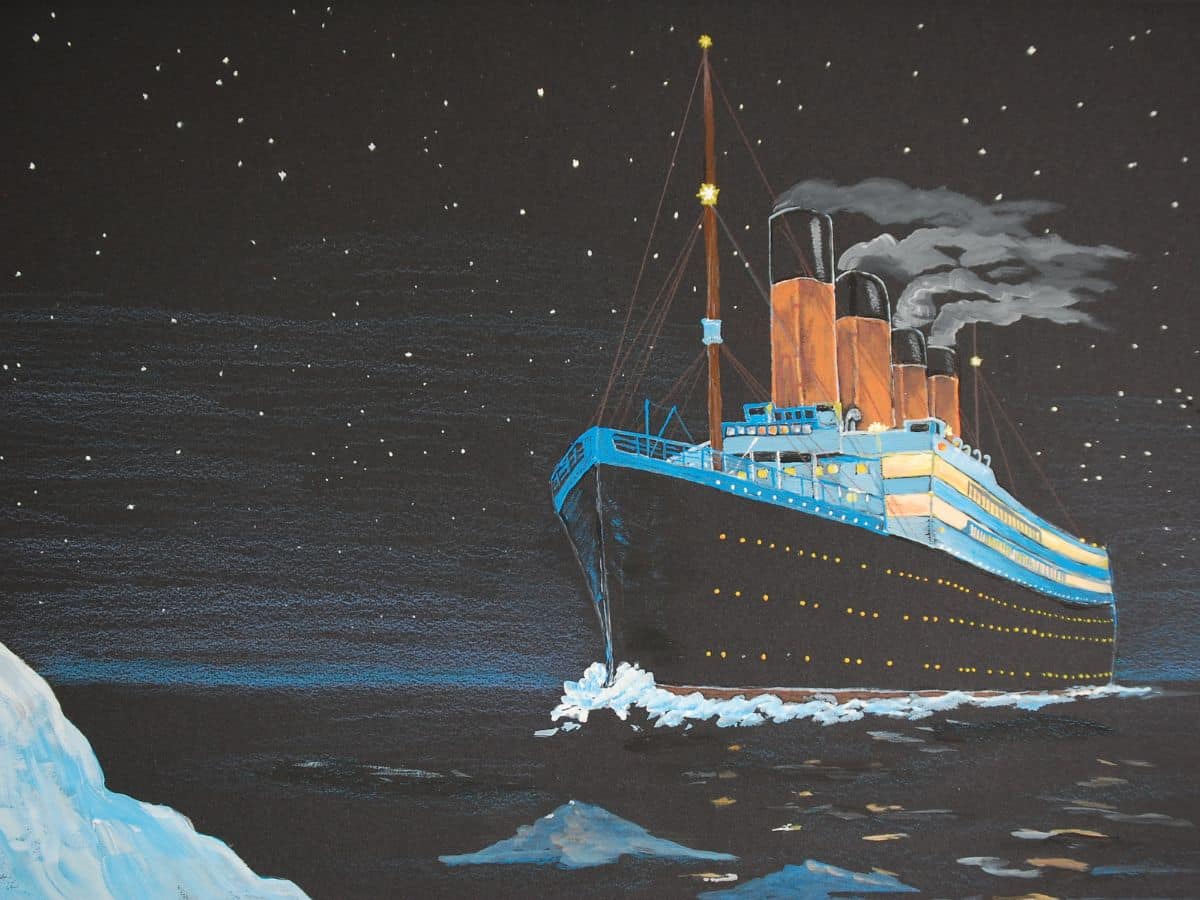
Much like the downfall of the Titans, corporate declines serve as cautionary tales, reminding us that even ‘titanic’ entities are not immune to the consequences of their actions – or icebergs!
It’s fascinating that even in an age dominated by emojis and hashtags, the words rooted in ancient myths still hold significant power, shaping our digital interactions in subtle yet incredible ways.
Don’t get me wrong – it’s always important to adapt and embrace new forms of expression and communication! However, understanding the stories behind the vocabulary we use remains truly relevant.
As we enter new digital spaces rife with misinformation, fleeting trends and virtual relationships, this foundational layer of language offers us a solid platform to adapt and evolve. It enriches our online interactions, imbuing them with a depth and context that transcends the fleeting nature of digital chatter.
How Greek Myths Shape Modern Thought

Greek Mythology has also been used to develop many philosophical concepts throughout history, serving as both a source of inspiration and a subject of critical analysis. The myths themselves offer complex narratives that have been dissected, interpreted and reimagined by philosophers for centuries, shaping the very structure of our modern society and ethics. So, what can we learn from them and how have they influenced our thoughts and actions?
Aristotle and the Golden Mean
Aristotle, a student of Plato, was deeply influenced by Greek mythology (unsurprisingly). One of his concepts is the ‘Golden Mean’, which advocates for moderation and balance in all things. This idea looks to the cautionary tale of Icarus, who flew too close to the sun due to his lack of moderation.
At a time where excess, extremes and over-reaching are ever-present, Aristotle’s Golden Mean serves as a guiding principle. It reminds us to seek balance in our digital approaches, avoiding the pitfalls of excess or impulse that can lead to issues such as brand dilution, poor budget allocation, or even ethical lapses.
Stoicism and the Myth of Sisyphus
Stoic philosophers like Seneca and Epictetus drew inspiration from the myth of Sisyphus, who was condemned to eternally roll a boulder up a hill, only for it to roll back down each time. They saw this eternal struggle as a metaphor for human perseverance and resilience.
The Stoic principle of accepting one’s fate and focusing only on what one can control aligns closely with the themes of this myth. At a time where uncertainties and changes are commonplace (and expected), the Stoic teachings inspired by Sisyphus offer a call for resilience. They encourage us to focus on our actions and attitudes, rather than external circumstances, thereby fostering a strong sense of direction, integrity and persistence.
The Social Contract
The Social Contract Theory explores the unspoken agreements between individuals and authorities. While modern thinkers like Hobbes and Locke have formalised this concept, these ideas can be seen clearly in Greek mythology.
Prometheus defied the gods to bring the gift of fire to humanity. This act serves as an early example of the social contract: Prometheus sacrifices his own well-being to offer humans the benefits of fire – a symbol of knowledge, technology and advancement. In return, humans are endowed with the tools to build civilisation but also inherit the ethical and existential dilemmas that come with such power.
Fast forward to the digital age, and we find ourselves making similar trade-offs. In exchange for technological conveniences like instant communication and access to a world of information, we often relinquish our personal data and privacy. Similarly, we compromise certain freedoms for the sake of safety and security, whether it’s through surveillance cameras in public spaces or data monitoring by governmental agencies.
In both scenarios, the underlying principle is the same: individuals and society at large make sacrifices or compromises in exchange for greater benefits. The tale of Prometheus serves as a timeless reminder of this delicate balance, urging us to consider the ethical and societal implications of the ‘contracts’ we enter into.
We are well and truly in a unchartered digital age, where artificial intelligence challenges our understanding of consciousness, where we are slowly relinquishing our freedoms online and where social media platforms become unassigned arbiters of truth.
For that reason, the many philosophical lessons gleaned from the Greek myths take on a renewed importance.
These stories and concepts equip us with the ability to question new and established norms, helping us build balanced digital platforms that promote fresh thought and discussion for everyone.
The Divine Digital Connection

The influence of Greek Mythology is also seen throughout the narratives of many religious texts. While distinct in their theological outlooks, the similarities in their stories reveal a shared human impulse to grapple with existential questions through the means of myth and legend.
This is especially poignant in today’s world, where the quest for meaning and purpose often intersects with religious and spiritual exploration, even in the face of scientific and technological advancements.
This intersectionality offers businesses the unique opportunity to infuse brand narratives and digital marketing strategies with deeper layers of meaning, drawing upon these ancient myths and religious stories to engage audiences on a more profound level.
Creation Myths
In Greek mythology, the universe springs forth from Chaos – a formless void. This concept parallels the Biblical account in Genesis, where God creates the world from a similar nothingness. Both stories aim to answer the age-old question: ‘Where the hell did everything come from?’
As new platforms and technologies seem to emerge with similar speed, these myths offer a helpful perspective. They remind us that even though we live in a world of rapid innovation and change, the fundamental questions about our origins and purpose remain truly constant.
The Flood Stories
The flood myth is a recurring narrative across various religious traditions, from the Greek story of Deucalion and Pyrrha to the Judeo-Christian tale of Noah’s Ark, as well as accounts in Hindu and Islamic traditions. These myths describe a divine flood sent to purge humanity’s wickedness, sparing only a select few to repopulate the Earth.
In today’s context, where issues like climate change and environmental collapse are still heated talking points, these ancient flood myths resonate strongly. They draw focus on our collective responsibility, urging us to think of our actions and their impact on the material world around us – businesses are continuously taking steps to be greener and more eco-friendly to align with these points.
Temptation and Punishment
The Greek myth of Orpheus and Eurydice parallels the Biblical story of Lot’s wife, both cautioning against the consequences of losing focus.
In the myth, Orpheus ventures into the Underworld to retrieve his love, Eurydice. Hades agrees to her release but sets a condition – Orpheus must not look back until they’ve both reached the mortal realm. Tragically, Orpheus succumbs to temptation, glancing back and losing Eurydice forever.
This myth serves as a stark reminder of the pitfalls of losing focus. Whether it’s the allure of cutting corners or the impulse to stray from our goals or target audience, the story of Orpheus and Eurydice admonishes us to exercise discipline and remain steadfast in our pursuits and convictions.
The lessons taught in older myths were important enough to be pulled through many religious texts, implanting their relevance in the world we currently know. They forever act as cautionary tales, warning us of the timeless pitfalls that can ensnare us, while also providing invaluable lessons that can help us avoid them.
The parallels between Greek myths and religious stories offer more than just historical or cultural insights; they serve as a clear reflection of the unchanging core of human nature.
Despite the rapid advancements in technology and shifts in societal norms, we remain influenced by the same emotions and impulses – the digital world, for all its innovation, is still a stage where the inevitable dramas of human emotion unfold.
How Brands Craft Legends

Brands that have successfully captured the public’s interest and loyalty understand the power of storytelling as a means to forge these timeless emotional connections.
Many of these brands also add an element of mythology to craft narratives that reach to us on a much deeper level. By using myths, these brands are able to evoke universal themes and emotions that transcend cultural boundaries. This not only enriches the brand’s identity but also fosters a more meaningful and enduring relationship with their customer.
It’s this emotional resonance that sets a brand apart and ensures its longevity:
Nike
A good example is Nike, named after the Greek goddess of victory, who embodies the qualities of strength, speed and triumph. Their ‘Just Do It’ slogan and brand stories often feature the Hero’s Journey, a narrative structure that we see time and time again in Greek mythology.
Apple
Similarly, Apple’s brand story echoes the Promethean myth, portraying the company as a disruptive force that brings ‘fire’ (or innovation) to mankind. The iconic Apple logo (a bitten apple) subtly alludes to the story of Adam and Eve, evoking themes of powerful knowledge and discovery.
Oracle
Oracle, the computer technology corporation, takes its name from the ancient Greek oracles who were considered to be portals of wisdom and foresight. Just as the oracles of ancient Greece provided guidance and predictions, Oracle aims to offer businesses insights through its data management software.
In a world where data is everything, Oracle positions itself as the modern-day seer, helping companies see clarity in a crowded, digital space.
Pandora
The popular jewellery brand Pandora cleverly derives its name from the Greek myth of Pandora, a story that highlights the universal challenges and complexities of human life. In the myth, Pandora (the first woman created) opens a forbidden container, releasing all the world’s evils – but leaving hope inside. Her story is one of much discussion and interpretation, as you can imagine.
The brand ingeniously captures this by offering a platform for individuals to tell their own unique stories. In this way, Pandora transforms the act of jewellery selection into a form of modern mythology. Each charm or pendant becomes a chapter in the wearer’s personal journey. The brand thereby creates a strong emotional resonance by intertwining ancient myth with contemporary storytelling, enriching both the consumer experience and the brand’s own narrative.
The digital world has become a space where mythological narratives are not just preserved but actively reimagined – which offers something else: interactivity.
Unlike the more passive consumption of myths in texts, digital platforms offer an immersive experience. Whether it’s choosing a path in a myth-based video game or engaging with a brand’s story through social media, the audience becomes an active participant in the modern retelling of these myths.
As we rush into an increasingly digital future, the rebranding of mythology in these modern platforms reminds us that while the mediums may change, the core human impulses – to understand ourselves, to connect with others and to make sense of the world –remain constant.
Timeless Tactics for Digital Titans

The trend “How often do you think about the Roman Empire?” has gained significant traction on social media platforms for a reason. The hashtag #RomanEmpire has been watched by approximately 1.8 billion people on TikTok alone, as reported by Fortune, and has also been covered by various media outlets like LBC and Daily Mail, further amplifying its impact.
This overwhelming interest in the Roman Empire serves as compelling evidence of the enduring fascination with ancient civilisations and narratives. It’s a testament to the timeless allure of history and mythology, even in our rapidly evolving world.
The Greek myths in particular highlight the immutable aspects of our human nature, capturing the essence of our desires, fears and moral quandaries. They remind us to exercise caution in our strategies, to be mindful of ethical considerations and to seek a balanced approach in our pursuits.
As we grapple with the rapid advancements in technology and the ethical questions they pose, the Greek myths provide a stable foundation, helping us to make informed decisions rooted in timeless principles.
By remembering the lessons given by mythology (and history in general), we unlock a deeper understanding of the challenges and dangers that the digital future presents. The stories offer us ethical, behavioural and strategic insight, reminding us that while the platforms may change, the fundamental opportunities presented by human interaction and behaviour remain constant.
Embark on Your Own Digital Odyssey
As we venture further into the digital labyrinth, the wisdom held in ancient myths and civilisations offers us a guiding thread.
Don’t get lost in it; thrive in it by integrating these timeless principles into your strategies. From branding considerations to strategic focus, the lessons from Greek mythology are more relevant than ever.
Contact us at Cadmus Copy to embark on a journey that fuses the old with the new, crafting digital narratives that resonate on a universal scale.