

AI Overviews now appear in approximately 30% of Google searches, with research analysing 75,000 brands revealing that brand web mentions show the strongest correlation with AI visibility; far surpassing traditional backlinks.
ChatGPT now drives traffic to over 30,000 websites daily, a dramatic increase from under 10,000 just months earlier. So there is no point discussing how AI might interfere with your SEO strategy. It has already barged through the doors and made itself at home, whether you like it or not.
This change demands a change beyond traditional ranking strategies towards Answer Engine Optimisation (AEO) and Generative Engine Optimisation (GEO).
What follows in this article reveals how to structure content for AI consumption, leverage technical signals AI platforms prioritise, build the brand authority that translates to citations and measure success across emerging platforms; all while maintaining the human expertise that separates valuable content from algorithmic noise.
Why AI Platforms Think Differently

AI search platforms process information differently than traditional search engines. They extract modular, quotable segments rather than evaluating page-level authority, making citation-worthiness more valuable than keyword density. This is a big change.
Content with credible citations, statistics and expert quotations sees 30-40% relative improvement in generative engine visibility. 52% of sources cited in AI Overviews rank in the top 10 traditional results, but nearly half come from beyond the first page. Position isn’t everything anymore, which may surprise you.
The moves ‘rank position’ to ‘citation frequency’ as the primary success metric. Traditional SEO optimised for positions 1-3 on SERPs. AI search optimises for being quoted, referenced or mentioned when synthesising answers across multiple sources.
Two critical metrics now define the success of this; namely citations (linked references) and mentions (unlinked brand references). Semrush’s AI Visibility Index revealed significant gaps between brands earning citations versus only mentions. The Ahrefs research is particularly telling; a 0.664 correlation for brand mentions versus 0.218 for backlinks demonstrates a drastic reordering of what creates authority.
Think of it as building quotability architecture. You’re structuring content so AI can cleanly extract statements, statistics and expert insights without ambiguity. Unlike humans who tolerate more complexity and narrative buildup, AI models reward direct, declarative statements with clear attribution.
AI platforms are, in many ways, collaborative research assistants rather than search engines. They’re not trying to send users to the best page (which may sound counter productive from a search engine). Instead, they’re synthesising the best answer from multiple sources. Your content’s job isn’t to be the destination therefore; it’s to be the most reliable, clearly-stated contributor to that synthesis. It must be of high quality and genuinely helpful.
Does GEO impact Copywriting For Readers?

GEO tends to reward copy that’s built around usefulness, not performance tricks, which lines up neatly with Google’s ‘helpful, reliable, people-first’ content guidance. That means fewer clever or unique intros, more direct answers and more care taken to show who wrote something, how conclusions were reached, and why the page exists.
It also urges you away from padding and towards content that a reader would genuinely bookmark, share or trust enough to act on.
Because people scan online, GEO-friendly copy typically leans into proven readability patterns like tight sections, meaningful headings, and obvious grab points, which matches NN/g’s web writing research on scanability and succinctness. In day-today practice, it means you’re writing for a reader who’s moving fast, not studying your prose.
-
Lead with the answer, then explain (so both your clients and engines can extract the point cleanly).
-
Use descriptive headings that tell the truth about what’s underneath.
-
Back important claims with credible sources and transparent ‘how’ details where relevant.
-
Keep it unique, relevant and written for users, which also mirrors Bing’s Webmaster Guidelines
The overall effect is better copy for readers, with a higher bar for clarity and trust. Good all round.
The Architecture Behind Answer-Ready Content

While understanding these differences certainly matters, the practical implementation requires rethinking how you structure every paragraph, heading and data point. AI platforms parse content into extractable components using heading hierarchies, structured elements and answer-first formatting. So, there’s a lot to break down.
Clear heading hierarchy (H1, H2, H3) serves as navigational landmarks (as they have always been). AI models rely on headings to understand topical organisation and relationships between concepts. Your headings should be 6-10 words, keyword-rich and descriptive. Maintain parallel grammatical structure across same-level headings.
Answer-first formatting means placing core insights at section beginnings rather than burying them in narrative buildup. Traditional journalism’s inverted pyramid structure actually serves AI extraction perfectly in this regard: most important information first, supporting details after.
Structured elements dramatically improve parseability:
-
Bulleted lists for features, benefits and key takeaways
-
Numbered steps for processes and how-to instructions
-
Comparison tables for evaluating alternatives
-
FAQ blocks for addressing common questions directly
FAQ schema is particularly effective for capturing ‘how,’ ‘what’ and ‘why’ questions fitting in with natural search behaviours. How-to guides with sequential numbered steps align perfectly with NLP models and voice search patterns.
As a general rule, aim to keep paragraphs to 3-5 sentences. Use clear subject-verb-object sentence construction. Employ strategic text formatting; bold for key terms, italics for emphasis. Choose declarative statements over hedging language.
Journalists, technical writers, educators and more have used these techniques for decades, so this isn’t really anything new. But it has gained more importance. AI search platforms simply reward what good communicators have always practised; clarity, hierarchy and respect for the reader’s time.
Schema, llms.txt and the Trust Infrastructure
Schema is the language that translates unstructured content into machine-readable entities. It identifies page types, defines key entities, extracts specific attributes and connects information to knowledge graphs. It’s foundational infrastructure.
Structure still provides the skeleton, but AI platforms increasingly demand signals that content comes from genuine expertise rather than algorithmic creation. Schema markup has changed to a core ranking factor in AI-driven search.
Five schema types deliver the highest impact for AI visibility:
-
FAQ schema enables question-answer extraction.
-
Product schema powers eCommerce comparisons with pricing, availability and specifications.
-
Review schema provides trust signals through customer ratings.
-
Organisation and Author schema demonstrate E-E-A-T credentials.
-
HowTo, Video and Image schema serve multimodal search needs.
The critical change involves creating connected graphs rather than isolated code blocks. Instead of separate schema types, link entities through relationships; Article connects to WebPage, which belongs to Website, which is owned by Organisation. This interconnected aspect hugely helps AI systems understand entity relationships and semantic context.
The llms.txt represents an emerging standard specifically designed for AI crawlers. This structured Markdown file explicitly lists your most important pages with brief summaries, guiding AI models to prioritise valuable content rather than wandering through navigation and sidebars.
The standard uses two files. llms.txt provides a concise table of contents listing essential pages organised by section. llms-full.txt offers comprehensive documentation in clean Markdown format for AI systems with larger context windows. Major implementations include Anthropic, Cursor and Expo, with rapid growth (since November 2024).
If your website disappeared tomorrow, could an AI platform accurately describe your expertise, credentials and unique value proposition using only the structured data you’ve implemented? Most brands would fail this test. Their human-readable content is rich, but their machine-readable infrastructure is virtually silent. This is why balancing both is so important.
Building the Web of Validation

The most powerful ranking factor for AI search isn’t what you say about yourself. It’s what the broader web ecosystem says about you.
As indicated, brand web mentions show that 0.664 correlation with AI Overview visibility versus 0.218 for backlinks; a threefold difference. The more your brand appears in high-quality sources like forums, reviews, news articles and industry listicles, the more AI tools interpret it as credible and authoritative.
Platforms like Reddit, Quora and review sites carry significant weight in AI training data and real-time retrieval. We’re talking about genuine participation in these spaces, not spam. This cannot be emphasised enough. AI search platforms trust distributed validation over concentrated self-promotion. A single brand mention in a reputable industry roundup often carries more weight than ten backlinks from mediocre blogs.
Launch digital PR campaigns targeting brand mentions in industry publications. Participate authentically in Reddit, Quora and other professional communities. Encourage customer reviews across Google, Trustpilot, G2 and Capterra (although review where impact is felt most). Contribute thought leadership to authoritative external platforms. Pursue podcast appearances, webinars and speaking engagements that generate mention coverage.
Interestingly, traditional SEO warned against acquiring backlinks too quickly due to penalty risk. AI search actually rewards mention velocity; the more frequently your brand appears across diverse, authoritative sources in a short period, the stronger the credibility signal. Likewise, traditional SEO focused on link surface area (how many sites link to you). AI search values conversation surface area: where are people discussing you, recommending you, quoting you and validating your expertise in natural contexts?
Research from NP Digital surveying 181 SEO experts found structural signals and data-backed credentials outperformed volume-based metrics. E-E-A-T demonstration through external validation matters considerably: verified credentials on third-party platforms, expert endorsements, industry award mentions and case study features in reputable publications. All should be worked on.
What's the Difference Between Authority and AI Visibility
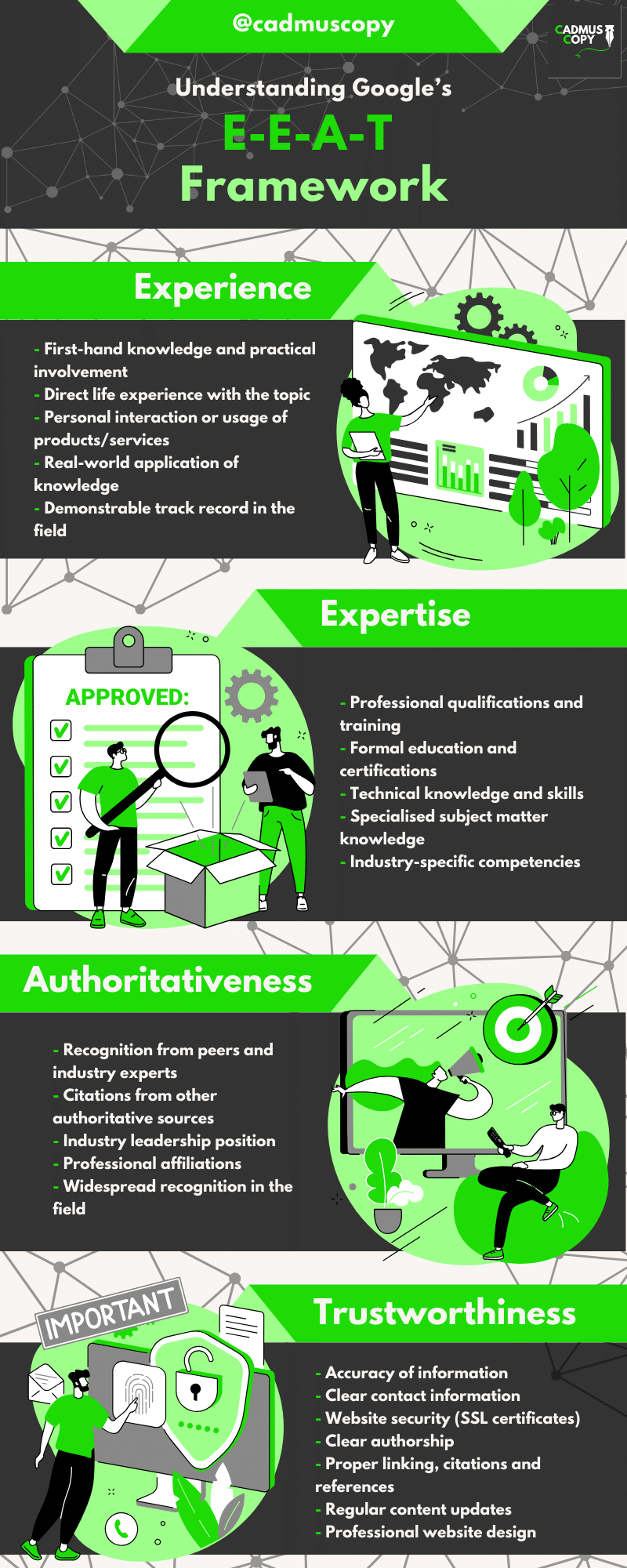
The convergence of traditional SEO fundamentals with AI-specific optimisation creates a hybrid approach that rewards consistency over disruption. Strong technical SEO remains essential; fast load times, mobile optimisation, clean HTML, high-quality content and robust E-E-A-T signals.
They’re simply enhanced with AI-optimised structure, schema markup, strategic citations and platform-specific tactics.
The counterintuitive insight in this is that AI search doesn’t replace traditional SEO best practices. Clear writing, authoritative sourcing, transparent credentials, structured information and genuine expertise (the principles quality publishers have always followed) are now algorithmically advantageous rather than just ethically preferred.
Research shows AI search currently drives less than 1% of traffic to most sites, with traditional search maintaining dominance. But ChatGPT mobile app downloads increased by nearly 20 million between February and March alone. Early adopters implementing AEO and GEO strategies now are positioning themselves for compound advantages, as AI search adoption inevitably accelerates.
In this sense, the implementation timeline is forgiving, but finite non-the-less. Brands have a limited time to audit content structure, implement schema infrastructure, develop llms.txt files and launch ecosystem-building campaigns before competitive saturation raises the difficulty level exponentially. It’s a case of, will you ride the first wave while the path is less crowded? An ever repeating occurrence with scalable digital marketing.
Fortunately, human expertise remains the irreplaceable ace card. AI provides efficiency and scale for keyword research, trend prediction and natural language optimisation, but genuine experience, first-hand insights and unique perspectives are what AI platforms ultimately seek to cite.
The question is whether your content actually demonstrates the expertise AI platforms help surface to their users.
When the answer is genuinely yes, optimisation becomes amplification rather than manipulation.
One Response